
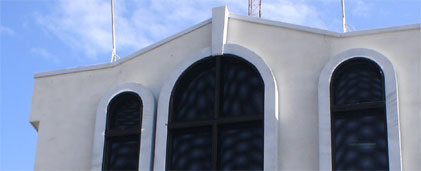
Historic buildings along hurricane-prone coasts face a difficult balance. Their original windows, often wood sash with old glass, are among their most valuable features, and also among their most vulnerable. Owners want to protect them, while preservation guidelines aim to keep the building's appearance and historic materials intact. With careful planning, both goals can be met.
Why Historic Windows Need Special Care
Historic windows were not designed for modern wind and impact standards. Old glass is thin and brittle, wood sash can be fragile, and replacement glass that matches the original appearance may be hard to find. Yet replacing original windows with modern impact windows can change the look of a facade and remove historic material, which preservation standards generally try to avoid. Protecting the existing windows from outside is often the preferred approach.
Working With Review Boards
Buildings listed on historic registers or located in local historic districts may need approval before changes are made to the exterior. Requirements differ from place to place, but reviewers commonly ask questions like these:
- Is the change visible from the street? Highly visible alterations receive more scrutiny.
- Does it damage historic materials? Anchors drilled into original masonry or trim may be discouraged.
- Is it reversible? Installations that can be removed later without lasting harm are usually favored.
- Does it fit the character of the building? Size, color and profile should be compatible with the architecture.
Talk to your local preservation office early. Bringing photos of the building, drawings of the proposed installation and samples or images of the product makes the review process smoother. State historic preservation offices in hurricane-prone states, including Florida, have published storm preparedness guidance for historic properties, and the National Park Service provides technical guidance on window treatments for historic buildings.
Comparing Protection Options
Plywood
Plywood can protect windows temporarily, but repeated fastening into historic trim causes damage over time, and boarded windows change the building's appearance whenever they are up. Read hurricane shutters vs plywood.
Roll-down and accordion shutters
These require housings and tracks that are often bulky and visible. They can be difficult to fit to arched or irregular historic openings and may be rejected for prominent facades.
Impact-resistant replacement windows
Replacement windows provide protection without shutters, but they remove original material and may not match historic profiles. They are sometimes acceptable on secondary facades or non-original windows.
Operable historic-style shutters
Some buildings originally had functional shutters. Where documented, rated shutters that replicate the historic style can be an appropriate solution.
See-thru barriers
Perforated metal barriers mounted in front of the windows protect them from debris while remaining visually light. From the street they read as screens, and the window shape and sash pattern remain visible behind them. Fine perforation patterns, narrow frames and finish colors chosen to match the trim help the barrier recede. This is the approach used by STORM SHIELD, whose barriers have been recognized and approved for use by the Historical Review Boards of Dade County, Florida.
Design Tips for Historic Installations
- Follow the opening shape. Arched and circle-top windows should be protected with barriers fabricated to the same shape rather than covered with rectangles. See protecting arched and custom windows.
- Choose the mounting location carefully. Inset mounting inside a masonry reveal can keep the barrier in the shadow of the opening and leave surrounding trim untouched. Where face mounting is necessary, align frames with existing trim lines.
- Anchor into mortar joints or non-historic material where possible, so the installation can be reversed with minimal patching.
- Match finish colors to the window frames or trim, or use a dark finish that reads like a screen.
- Keep windows operable. Hinged barriers allow sash to be opened, cleaned and maintained, which is vital for preserving old wood windows.
- Document the installation with photos and drawings for the review board and future owners.
Benefits Beyond Storm Protection
Permanent see-thru barriers can also help preserve historic interiors. They reduce solar heat gain and reflect a share of ultraviolet light, which can slow fading of floors, fabrics and artwork. They deter vandalism and break-ins, a real concern for historic buildings that are vacant part of the year. And they protect fragile glass from everyday hazards such as stray balls and lawn equipment debris. See the sun control study.
A Real-World Perspective
In a story from our news archive, a Florida homeowner worried that her homeowners' association would not approve hurricane protection, until she learned that STORM SHIELD had been approved for Vizcaya, the historic estate in Miami. The same qualities that satisfy preservation reviewers – a light, see-thru appearance and careful fit – often make approval easier in planned communities with strict design rules.
Questions to Bring to Your Preservation Office
- Does the building's designation or district require a certificate of appropriateness for exterior storm protection?
- Are permanent barriers acceptable on primary facades, or only on secondary elevations?
- What anchoring methods are preferred for the building's masonry, stucco or wood trim?
- Are there finish colors or profiles the board prefers?
- Can approval be given for the whole building at once, so all openings are protected consistently?
Having answers before ordering avoids costly changes later and makes sure the protection you install is the protection the board expects to see.
Funding and Planning
Some historic property owners and public agencies may be eligible for hazard mitigation or preservation grants. Eligibility varies, so check with your state historic preservation office and state emergency management agency. Whatever the funding source, plan the project well before hurricane season so there is time for review, fabrication and installation.
Conclusion
Protecting a historic building from hurricanes does not have to mean hiding it. By working with review boards early, choosing protection that is visually light and reversible, and fitting each barrier to the shape of its opening, owners can keep original windows safe while preserving the character that makes the building worth protecting. Explore how InvisiPerf see-thru technology works, or browse the commercial gallery for examples.